


Posture Correctors: Evidence, Types & What Works in 2026
Modern lifestyles demand long hours at desks, constant device use, and repetitive physical activities that challenge spinal health. Posture correctors have become increasingly popular tools for individuals seeking to address slouching, neck strain, and back discomfort. These devices range from simple elastic straps to sophisticated smart wearables, each designed to encourage better alignment and build lasting postural habits. Understanding which type suits your needs, what the clinical evidence actually says, and how to integrate these tools into a broader wellness routine can make the difference between temporary relief and meaningful improvement.
Understanding How Posture Correctors Function
Posture correctors work through a combination of physical support, proprioceptive feedback, and behavioral reinforcement. Most devices provide gentle resistance that pulls the shoulders back or supports the lumbar spine, creating awareness of body position throughout daily activities.
The mechanical principle is straightforward: by applying tension in specific directions, these devices encourage the spine to maintain its natural curves. Upper back braces typically focus on scapular retraction, pulling shoulder blades together to counteract forward-rolled shoulders. Lumbar supports stabilize the lower back, helping maintain the natural lordotic curve while sitting or standing.
Beyond physical support, posture correctors serve as sensory reminders. When you begin to slouch, the device applies pressure or tension, creating tactile feedback that prompts immediate correction. This proprioceptive training helps develop body awareness over time, which is critical for building sustainable postural habits without permanent device dependence.
The Role of Muscle Memory and Neuromuscular Training
Research suggests that external lumbar supports may influence proprioception and postural control, indicating these devices do more than provide passive support. They engage the neuromuscular system, training muscles to activate in proper sequences and helping your body remember optimal alignment patterns.
However, this process requires active participation. Wearing a posture corrector while remaining sedentary and making no conscious effort to engage core muscles produces limited long-term benefits. The most effective approach combines device use with targeted strengthening exercises and regular movement breaks.
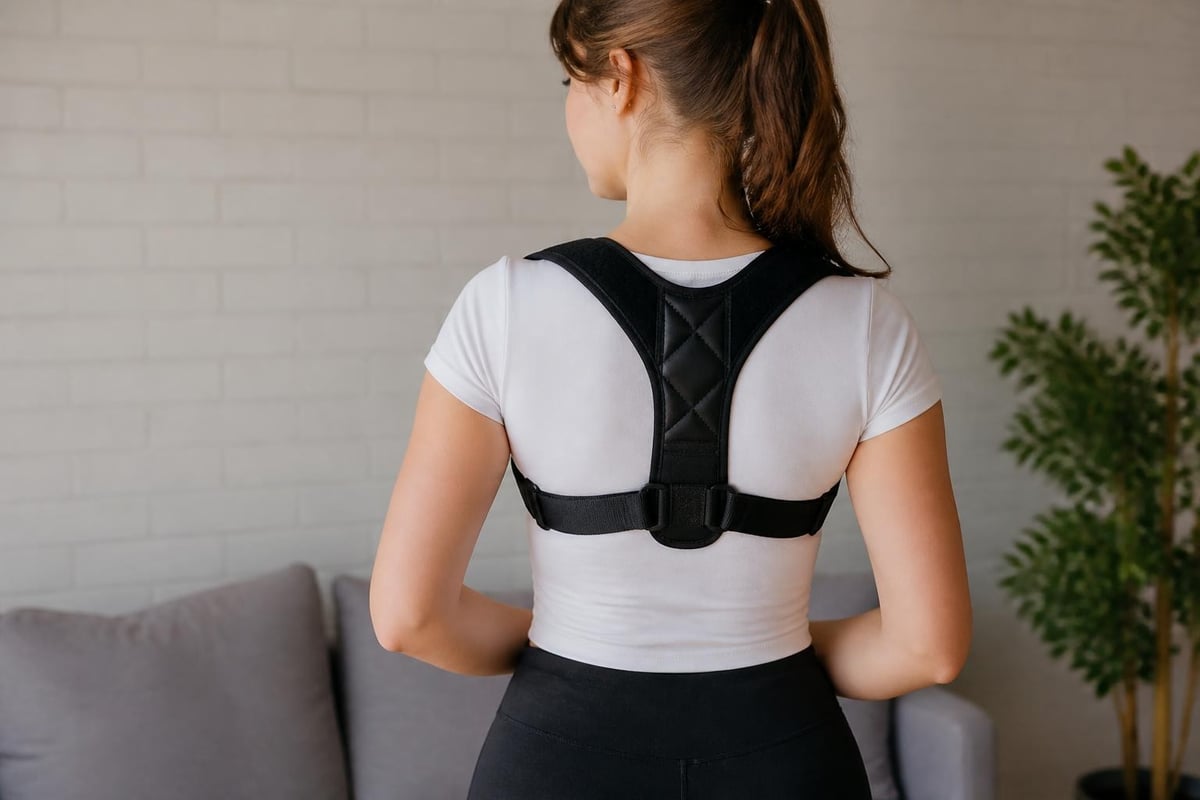
Types of Posture Correctors and Their Applications
The market offers diverse posture corrector designs, each targeting specific postural challenges. Understanding these categories helps match the right device to your particular needs.
| Type | Primary Focus | Best For | Typical Duration |
|---|---|---|---|
| Upper Back Brace | Shoulder retraction, thoracic support | Forward head posture, rounded shoulders | 30-60 minutes daily |
| Lumbar Support Belt | Lower back stabilization | Desk workers, lifting activities | 2-4 hours during activity |
| Full Torso Support | Comprehensive spinal alignment | Post-injury recovery, chronic conditions | As prescribed |
| Smart Posture Trainers | Vibration feedback for slouching | Building awareness, habit formation | Throughout workday |
Upper back and clavicle braces are the most common consumer devices. These figure-eight designs sit across the shoulders and pull them backward, counteracting the forward slump that develops from extended screen time. They're lightweight, discreet under clothing, and ideal for desk workers experiencing neck and shoulder tension.
Lumbar supports come in various rigidity levels, from flexible elastic bands to semi-rigid designs with internal stays. According to evidence reviewed by Cochrane, while these devices are widely used, the evidence for chronic low back pain management requires careful interpretation. They work best for acute situations or as preventive support during specific activities rather than continuous wear.
Smart Technology Integration
Smart posture trainers represent the newest category, using accelerometers and gyroscopes to detect spinal position and deliver vibration alerts when slouching occurs. These devices don't provide physical support but excel at building conscious awareness throughout the day.
For tech-focused users who appreciate data tracking and app integration, smart trainers offer detailed analytics about posture patterns, sitting duration, and improvement trends. They work particularly well when paired with recovery and relief products that address muscular tension accumulated from poor positioning.
Clinical Evidence: What Research Actually Shows
The scientific literature on posture correctors presents a nuanced picture. While anecdotal reports and user testimonials abound, rigorous clinical trials offer more measured conclusions about effectiveness.
A systematic review on orthotic devices for forward head posture published in 2025 examined clinical outcomes from neck and head posture orthoses. The findings indicated that specialized devices showed promise for specific postural deviations, particularly when combined with therapeutic exercises. However, the review emphasized that device design, wear duration, and concurrent interventions significantly influenced results.
The challenge with posture corrector research lies in study design and participant compliance. Many investigations struggle with small sample sizes, short follow-up periods, and difficulty controlling for confounding variables like concurrent exercise programs or ergonomic workplace modifications.
Understanding Evidence Quality and Practical Application
Harvard Health's overview of posture and back health emphasizes that while devices may provide temporary support, the foundation of good posture rests on core strength, flexibility, and movement habits. This perspective aligns with clinical guidelines suggesting posture correctors work best as transitional tools rather than permanent solutions.
Recent clinical trials, including a 2026 randomized study on customized posture-corrective exercise programs, are investigating how structured interventions compare to device-only approaches. Preliminary protocols suggest that combining targeted exercises with short-term device use may produce superior outcomes compared to either intervention alone.
- Evidence supports short-term use during specific activities
- Devices appear most effective when paired with strengthening exercises
- Long-term passive reliance may reduce intrinsic muscle support
- Individual responses vary based on underlying postural causes
The takeaway for consumers: posture correctors can be valuable tools within a comprehensive approach, but they shouldn't replace active muscle strengthening and ergonomic adjustments.
Choosing the Right Posture Corrector for Your Needs
Selecting an appropriate posture corrector requires honest assessment of your specific challenges, daily activities, and wellness goals. Not all devices suit all situations, and matching device characteristics to your lifestyle increases both comfort and compliance.
Assessing Your Postural Patterns
Begin by identifying where you experience the most discomfort or tension. Upper back and neck pain typically stems from forward head posture and rounded shoulders, common among those who spend hours on computers or mobile devices. Lower back pain often relates to prolonged sitting with poor lumbar support or activities involving bending and lifting.
Consider when your posture deteriorates most. If slouching begins after an hour at your desk, you need a device comfortable enough for extended wear during work sessions. If your posture fails during specific activities like driving or standing meetings, a more targeted approach may work better.
Key selection criteria:
- Adjustability: Look for multiple sizing options and adjustable straps that accommodate your body dimensions
- Material quality: Breathable fabrics prevent skin irritation during extended wear
- Support level: Match rigidity to your needs (gentle reminder vs. firm stabilization)
- Visibility: Determine whether discretion under clothing matters for your work environment
- Ease of use: Devices you can don independently promote consistent daily use
Sizing and Fit Considerations
Improper sizing undermines effectiveness and creates new discomfort. Measure your chest or waist circumference according to manufacturer guidelines, and when between sizes, consider whether you prefer firmer or gentler support. Too-tight devices restrict breathing and movement; too-loose devices provide inadequate feedback.

For those exploring broader wellness solutions, e-MarketBay's recovery and relief collection offers complementary products that address the muscular tension and discomfort often accompanying postural challenges.
Effective Usage Protocols and Common Mistakes
Even well-designed posture correctors fail to deliver results when used incorrectly. Understanding proper protocols maximizes benefits while avoiding potential drawbacks like muscle dependence or skin irritation.
Building a Gradual Wear Schedule
Start with 20-30 minutes daily during activities where your posture typically suffers most. This might be during morning desk work, afternoon meetings, or evening device use. Gradually increase duration by 10-15 minutes every few days as your body adapts.
Week-by-week progression:
| Week | Daily Duration | Focus Activity | Complementary Practice |
|---|---|---|---|
| 1-2 | 20-30 minutes | Desk work | Shoulder blade squeezes |
| 3-4 | 45-60 minutes | Extended sitting | Core bracing exercises |
| 5-6 | 60-90 minutes | Multiple sessions | Wall angels, chin tucks |
| 7+ | As needed | Activity-specific | Independent awareness |
Avoid wearing posture correctors during sleep or exercise unless specifically designed for those purposes. Sleeping in devices can restrict natural movement and breathing, while exercise-specific support requires different design characteristics than everyday posture aids.
Common Usage Errors
Many users either over-rely on devices or abandon them too quickly. Over-reliance occurs when wearing the corrector all waking hours, preventing muscles from developing independent strength. Your goal should be reducing device dependence over time as postural awareness and muscle capacity improve.
Conversely, premature abandonment happens when users expect immediate, dramatic results and quit after a few days. Postural adaptation requires weeks of consistent use combined with active strengthening. Set realistic expectations: meaningful improvement typically requires 6-12 weeks of dedicated effort.
Critical mistakes to avoid:
- Wearing devices too tightly, restricting breathing or circulation
- Neglecting strengthening exercises while relying solely on passive support
- Inconsistent use that prevents neuromuscular pattern development
- Continuing use despite pain or worsening symptoms
- Ignoring underlying causes like poor workstation ergonomics
If discomfort increases or new pain develops, discontinue use and consult healthcare professionals. Posture correctors address mechanical alignment but don't substitute for medical evaluation of underlying conditions.
Integrating Posture Support Into a Comprehensive Wellness Plan
Posture correctors deliver optimal results when embedded within broader lifestyle modifications addressing the root causes of poor alignment. Isolated device use without addressing daily habits and environmental factors produces limited lasting change.
Ergonomic Workspace Optimization
Your physical environment profoundly influences postural habits. Adjust your monitor to eye level, position keyboards to allow relaxed shoulders, and ensure chairs provide proper lumbar support. Even the best posture corrector cannot overcome eight hours daily in a poorly configured workspace.
Simple adjustments create significant impact:
- Monitor height: Top of screen at or slightly below eye level
- Keyboard position: Elbows bent 90-100 degrees, wrists neutral
- Chair support: Lumbar roll or cushion maintaining natural spine curve
- Feet placement: Flat on floor or footrest, knees level with hips
Active individuals should extend ergonomic thinking beyond the office. Consider how you position your body during workouts, carry bags, and use mobile devices. Active and on-the-go products designed for mobility and convenience support better alignment during diverse activities.
Complementary Strengthening and Flexibility Work
The American Academy of Orthotists & Prosthetists emphasizes that spinal orthoses work most effectively alongside therapeutic exercise programs. Target muscle groups that support optimal posture while addressing areas of tightness that pull the body out of alignment.
Essential exercises for postural support:
- Scapular squeezes: Strengthen upper back muscles between shoulder blades
- Chin tucks: Address forward head posture and neck alignment
- Planks: Build core stability essential for spinal support
- Thoracic extensions: Counteract upper back rounding
- Hip flexor stretches: Release tightness from prolonged sitting
Dedicate 10-15 minutes daily to these movements, ideally before or after posture corrector wear. This combination trains muscles while the device provides feedback, accelerating the development of independent postural control.
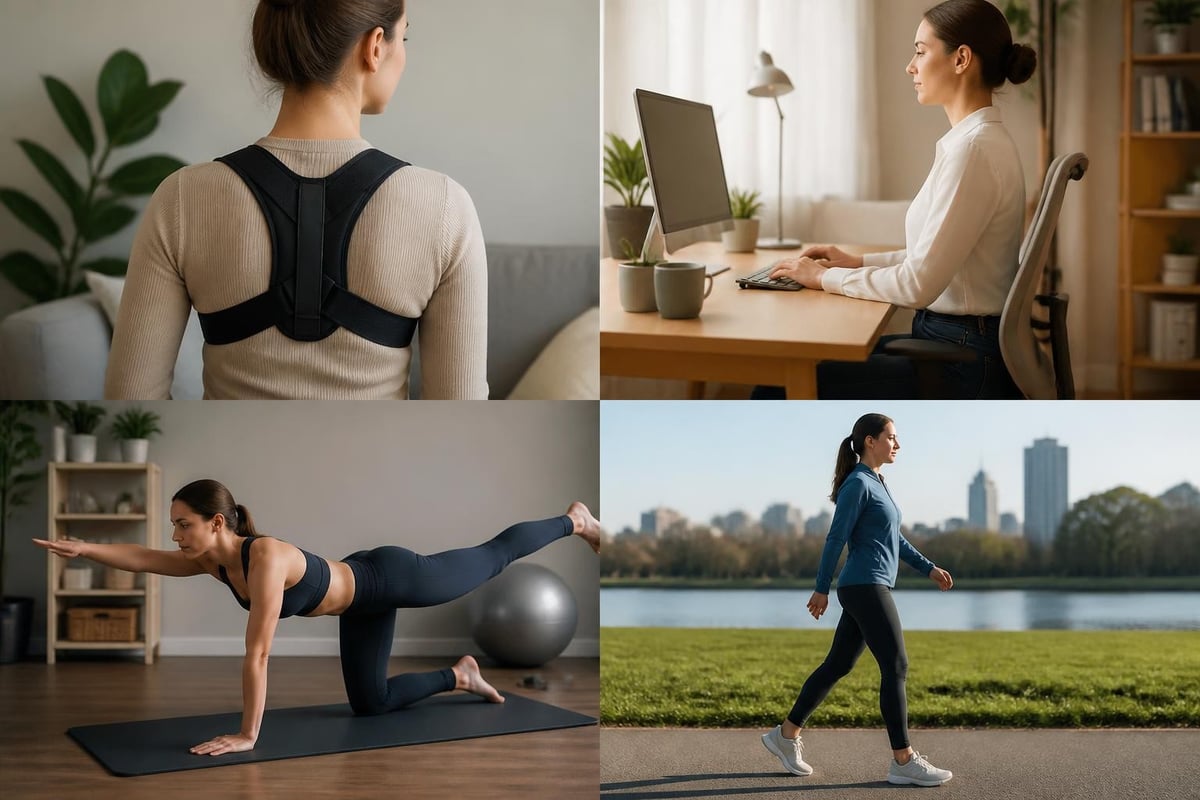
Special Considerations for Different User Groups
Posture correctors serve diverse populations with varying needs. Understanding group-specific considerations ensures appropriate device selection and usage protocols.
Desk Workers and Remote Professionals
Office workers represent the largest user demographic, often seeking relief from "tech neck" and rounded shoulder syndrome. For this group, comfort during extended wear and discretion under professional attire are priorities.
Choose lightweight, breathable designs that don't create visible lines under clothing. Smart posture trainers work particularly well for this demographic since they provide feedback without bulk. Pair device use with regular movement breaks every 45-60 minutes to prevent static loading on spinal structures.
Remote workers have flexibility to experiment with different devices throughout the day. Consider using firmer support during focused work sessions and switching to smart feedback devices during video calls or collaborative work when appearance matters more.
Athletes and Active Individuals
Active populations face different postural challenges than sedentary workers. Repetitive movement patterns in specific sports can create muscular imbalances that affect alignment. Cyclists develop forward-flexed thoracic postures, while runners may develop asymmetries from directional running or uneven terrain.
For athletes, posture correctors serve best during recovery periods and non-training hours rather than during activity itself. Focus on devices that don't restrict athletic movement but provide alignment feedback during rest periods when muscles are building memory.
Integrate posture work with sport-specific strength and flexibility training. A competitive cyclist benefits from thoracic extension exercises and upper back strengthening to counterbalance handlebar position, using posture correctors primarily during desk work or leisure time.
Aging Adults and Postural Changes
Age-related postural changes including kyphosis (upper back rounding) and forward head carriage respond differently to corrective devices than younger users' postural habits. Older adults may require gentler support that accommodates reduced flexibility and existing spinal adaptations.
Consult healthcare providers before beginning posture corrector use if you have osteoporosis, previous spinal surgery, or chronic conditions affecting bone health. Some devices may apply inappropriate force to vulnerable structures.
For aging users, emphasis shifts from aggressive correction to maintaining current alignment and preventing further deterioration. Combine very gradual device use with balance training and gentle strengthening appropriate for current fitness levels.
Monitoring Progress and Adjusting Your Approach
Effective posture improvement requires ongoing assessment and protocol adjustment based on actual results rather than assumptions. Establish baseline measurements and track changes systematically.
Objective Progress Markers
Rather than relying solely on subjective feelings, use measurable indicators:
Photographic documentation: Take monthly profile and front-view photos in consistent lighting and position. Look for changes in shoulder level, head position relative to shoulders, and upper back curvature.
Pain and discomfort tracking: Rate neck, shoulder, and back discomfort on a 0-10 scale daily or weekly. Note patterns relating to device use, work demands, and activity levels.
Functional assessments: Track changes in how long you can maintain good posture independently, reduced frequency of postural correction reminders, and decreased end-of-day tension.
Wear duration: Monitor whether you need the device for shorter periods as weeks progress, indicating improved independent postural control.
When to Modify Your Protocol
Adjust your approach if progress stalls or new issues emerge. Plateaus after initial improvement may indicate the need for different exercises, increased challenge in device settings, or addressing previously overlooked factors like sleep position or stress-related tension patterns.
Red flags requiring protocol changes:
- Increasing pain or new discomfort locations
- Skin irritation or pressure points that don't resolve with fit adjustment
- No measurable improvement after 4-6 weeks of consistent use
- Feeling unable to maintain posture without device after 8+ weeks
- Respiratory restriction or balance difficulties
If concerning symptoms develop, consult physical therapists or healthcare providers who can assess biomechanical factors and recommend appropriate modifications. Some postural deviations require professional treatment beyond what consumer devices can address.
Long-Term Maintenance and Device Independence
The ultimate goal isn't permanent device dependence but developing sufficient strength, awareness, and habits to maintain good posture independently. Plan for gradual reduction in device reliance as capabilities improve.
Transitioning to Independent Postural Control
After 8-12 weeks of consistent corrector use combined with strengthening exercises, begin testing independence. Spend portions of your day without the device, consciously maintaining alignment through muscle engagement and postural awareness.
Start with activities where you naturally maintain better posture and gradually extend to more challenging situations. Many users find they can eliminate device use entirely for some activities while maintaining it for specific high-risk situations like long desk sessions or travel.
Progressive independence milestones:
- Morning routine without device (weeks 8-10)
- Short desk sessions (30-45 min) independently (weeks 10-12)
- Full work morning without support (weeks 12-14)
- Device-free weekdays, using only during extended sitting (weeks 14-16)
- Occasional use only during particularly demanding situations (week 16+)
This timeline varies significantly between individuals based on starting postural deviation severity, concurrent exercise consistency, and lifestyle factors. Some users benefit from long-term occasional device use during high-risk activities, which is perfectly appropriate.
Maintaining Results Without Devices
Once you've reduced device dependence, maintain gains through continued attention to strengthening, ergonomics, and movement habits. Postural muscles require ongoing challenge to maintain their supportive capacity.
Schedule regular check-ins with your postural health, returning to photographic documentation quarterly. If you notice regression, reintroduce device use strategically rather than allowing gradual decline. Brief refresher periods with correctors can reinforce good patterns without creating new dependence.
For comprehensive wellness support beyond posture alone, explore complementary solutions that address related challenges. Quality sleep impacts postural recovery, making products from e-MarketBay's sleep and focus collection valuable additions to your overall wellness approach.
Posture correctors serve as effective tools for building awareness, providing support during postural retraining, and addressing discomfort from modern lifestyle demands. Success requires selecting appropriate devices, following evidence-based usage protocols, and integrating correctors within comprehensive approaches that include strengthening, ergonomic optimization, and movement habits. Whether you're a desk worker combating tech neck or an active individual addressing sport-specific imbalances, the right combination of temporary support and permanent habit change delivers lasting results. e-MarketBay provides carefully selected wellness and recovery products that complement your postural health journey, supporting an active lifestyle with quality tools designed for real-world performance and long-term use.